Anker Prime 250W vs Satechi 200W: Which Charger to Buy?
More power or more USB-C ports?
Anker Prime 250W vs Satechi 200W: choose the Anker A2345 for a mixed USB-C/USB-A desk and adjustable power controls. Choose the Satechi ST-C200GM-US for six USB-C connections. Your cable types and simultaneous laptop demand matter more than the headline wattage.
Affiliate disclosure: As an Amazon Associate, I earn from qualifying purchases. This post also contains Walmart affiliate links; I may earn a commission at no extra cost to you. Store buttons open search results, so check the exact model and seller before buying.
Both are premium desktop chargers designed to replace several adapters. Neither is a power bank, and neither sends its advertised total wattage to one device. This comparison uses manufacturer specifications and published documentation; it does not claim hands-on testing or measured charging results.
Models compared: Anker Prime Charger (250W, 6 Ports, GaNPrime), A2345, and Satechi 200W USB-C 6-Port PD GaN Charger, ST-C200GM-US. Avoid confusing the Anker charger with the similarly named Prime 250W power bank.
Anker Prime 250W vs Satechi 200W at a glance
| Buying question | Anker Prime A2345 | Satechi ST-C200GM-US |
|---|---|---|
| Total advertised output | Up to 250W shared | Up to 200W shared |
| Port types | 4 USB-C + 2 USB-A | 6 USB-C |
| Highest single-port output | C1: up to 140W | PD1 or PD2: up to 140W with one device connected |
| Power feedback | LCD display and control dial | No comparable screen or dial |
| Best practical fit | Mixed cables and heavier combined demand | Many USB-C accessories and a simpler desk |
| Main compromise | Only four USB-C sockets | Lower shared budget; port allocation matters |
The table lists maximum capabilities, not power every connected device will receive. Battery level, temperature, cable rating and the device’s charging protocol also affect charging.
Choose Anker if your desk still uses USB-A
Anker Prime 250W: the flexible mixed-device option
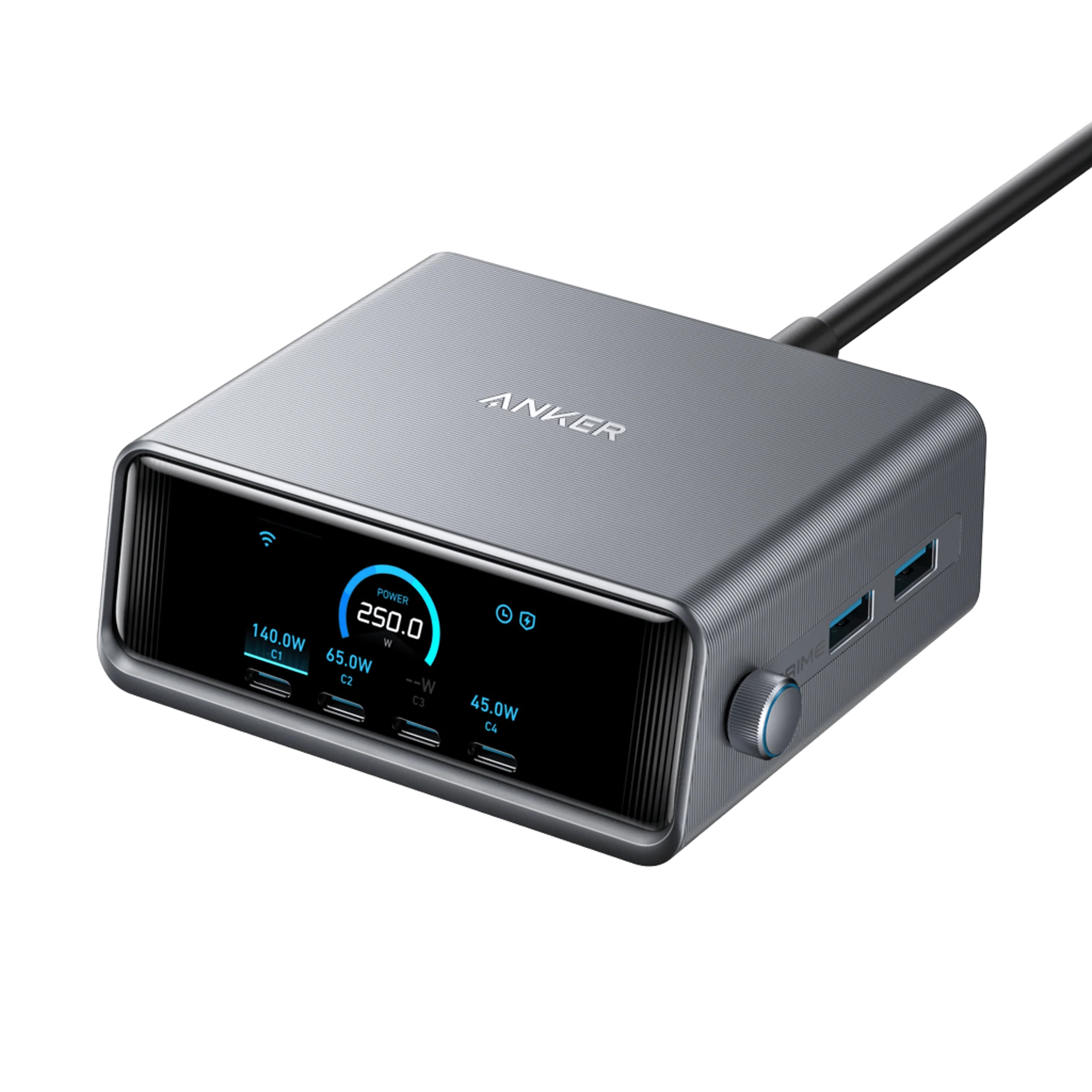
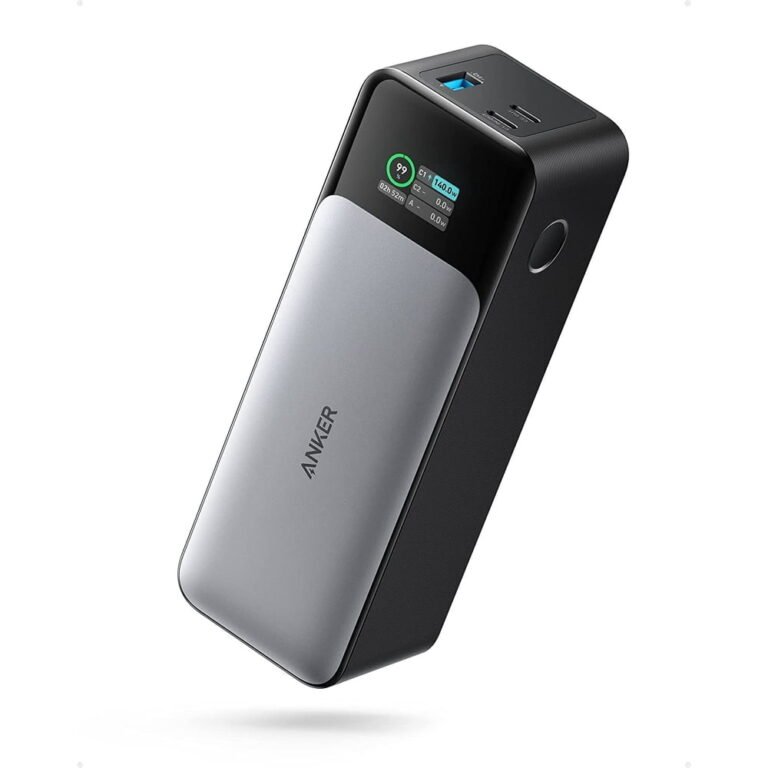
The A2345 makes sense when you want USB-A sockets for existing cables alongside a laptop, tablet and USB-C phone. Its display and dial add visibility and control, which can be useful when you regularly change your device mix.
Buy it for: mixed connector types, power feedback and a larger shared budget. Reconsider it if: you need five or six USB-C connections at once. Its two USB-A sockets cannot replace those missing USB-C ports.
Read the full Anker Prime 250W charger buying guide for a closer look.
Choose Satechi if all six cables are USB-C
Satechi 200W: the all-USB-C option
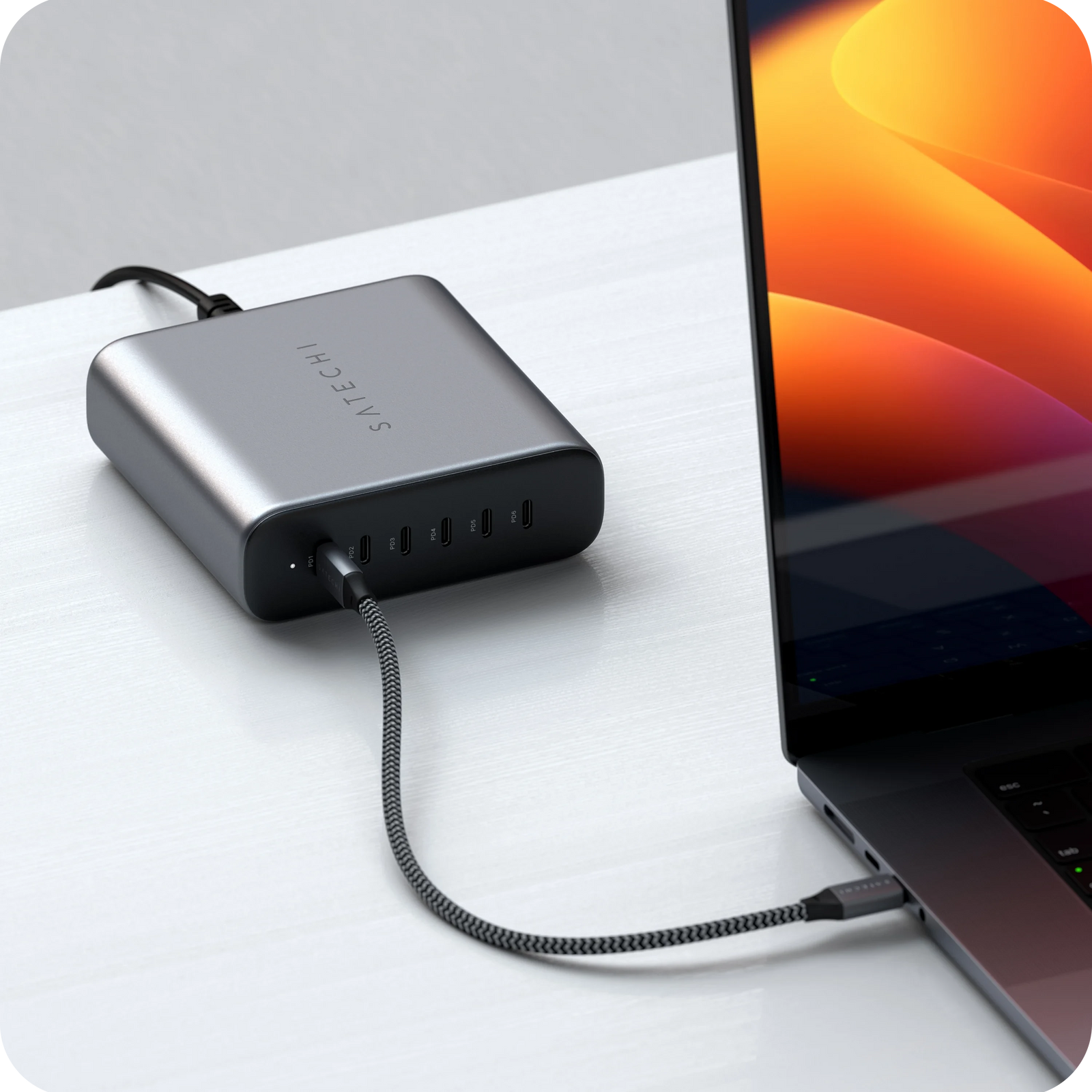
The Satechi is a more direct match for a desk that has already moved entirely to USB-C. You can connect six USB-C cables without adding a second adapter simply to gain more sockets.
That convenience does not mean six laptops can all charge at full speed. For several demanding devices, study the manufacturer’s power chart before purchasing. Six available connections are useful only when their shared outputs suit your devices.
Buy it for: an all-USB-C desk and a straightforward charging station. Reconsider it if: you need USB-A, extensive power controls, or high output on several ports at once.
See our Satechi 200W charger review for more buying guidance.
How power sharing changes the decision
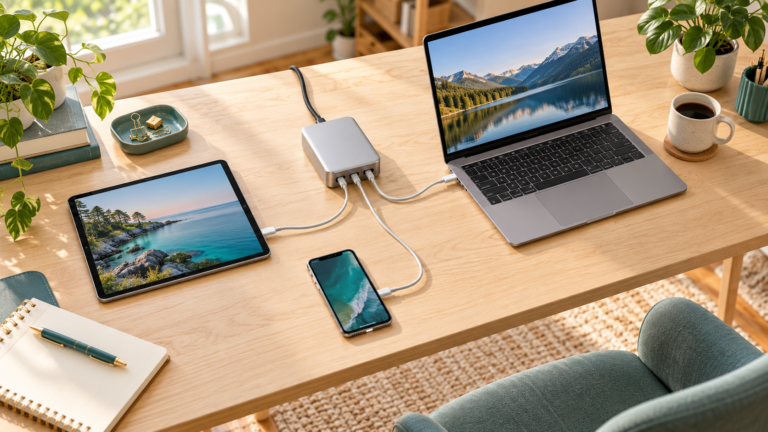
Start with the devices you actually charge together. As a planning example, a laptop needing about 65W, a tablet about 30W and a phone about 20W add up to roughly 115W. Both headline totals exceed that figure. This arithmetic is only a budget estimate: each connected port must still offer the required voltage, current and protocol.
A pair of laptops requesting roughly 100W each leaves less room for accessories. The Anker’s higher combined ceiling may be useful in that situation, but you must check the selected ports and active charging mode. Do not add the maximum labels on each port and assume they are all available simultaneously.
If your laptop charges briefly more slowly when another device connects, the charger may be renegotiating its shared budget. Our guide explains why multi-port chargers slow down with additional devices.
Which one should a MacBook owner buy?
For one MacBook Air, a phone and a tablet, neither charger is automatically the better purchase. Compare the ports you need and the final price. Extra total wattage alone does not make a laptop draw more power than it supports.
For a compatible high-power MacBook Pro setup, confirm the laptop model’s fast-charging requirements, the connection method and the cable. A 140W port label is not a promise that every MacBook will charge at 140W. Add a second laptop to your plan before deciding which power-sharing arrangement fits.
If you only need a laptop and phone, a smaller charger may be a better use of money. Compare our chargers for a laptop and phone together before paying for six ports.
Check your cables before replacing the charger
A suitable charger cannot overcome an unsuitable cable. For charging above 60W through USB-C, use a correctly rated 5A electronically marked cable. For a compatible 140W USB-C PD EPR connection, choose a suitable EPR cable; a clearly specified 240W cable is a practical option.
Phone fast charging also depends on protocol support. A high-wattage station does not guarantee a particular Samsung charging mode. Check PPS requirements and the exact model’s supported output profiles rather than buying by total watts alone. See our 60W vs 240W cable guide for help choosing.
Amazon vs Walmart: compare the actual checkout
Check both stores for the exact model number, new versus refurbished condition, seller identity, included AC cord, return terms and warranty eligibility. Search results can include other wattages, power banks or replacement accessories. Confirm the listing matches this comparison before ordering.
Prices, stock and coupons change. We do not name a cheapest retailer or show an unverified live price. Compare the final checkout total, including shipping and any coupon conditions. For either charger, buy the U.S. version with the appropriate supplied mains cable.
Frequently asked questions
Is the Anker 250W faster than the Satechi 200W?
Not for every device. A phone or laptop with a lower charging limit will not use the full shared budget. The difference becomes more relevant when several demanding devices charge together and their selected ports support the needed output.
Can either charger supply 200W or 250W to one laptop?
No. Those are shared total-output ratings. The highest listed individual-port capability in this comparison is 140W, subject to the device, cable and connection arrangement.
Does Satechi have six USB-C ports?
Yes. That is its clearest advantage for a desk with six USB-C cables. The Anker A2345 instead has four USB-C and two USB-A ports.
Which is better for travel?
Both are corded desktop stations. For one phone and one laptop, consider whether a compact wall charger meets your needs more conveniently. Compare total luggage space, required cables and local power connections.
Our recommendation
Choose Anker Prime A2345 if its USB-A ports, display, power controls and larger shared budget solve a specific need. Choose Satechi ST-C200GM-US if six USB-C sockets are the priority and its power chart fits your simultaneous devices. For a light charging setup, buy fewer ports and save the difference.
Sources and editorial method
Specifications checked October 30, 2026 against the official Anker A2345 product page, official Satechi product page, and Satechi’s port-output documentation. Recommendations are editorial judgments based on those specifications, not laboratory measurements.